
Mindful Travel in Marrakesh & Ourika Valley: Beyond the Medina
Marrakesh often meets travelers with intensity – sound, colour, movement. Everything asks for attention at once. But mindful travel in Marrakesh offers another way in. Slower. More intentional. It invites presence instead of performance.
In this guide, we begin in the Medina, moving gently through its most iconic places – the ever-shifting energy of Jemaa el-Fnaa and the surrounding bazaars, the quiet elegance of the Bahia Palace, the steady presence of the Koutoubia Mosque (admired only from the outside), and the contemplative beauty of the Madrasa Ben Youssef. We also share why we chose not to visit the famous Jardin Majorelle, and what that decision revealed about traveling with intention in a city shaped by contrasts.
From Marrakesh, the journey softens. We rent a car and travel east toward Aghmat, where Anima Garden (André Heller Garden) unfolds with the Atlas Mountains resting on the horizon – a place where time stretches, and nature becomes the guide. From there, we continue into the Ourika Valley, exploring its surroundings and the simple pleasure of riverside restaurants, where meals are shared beside flowing water and mountain air.
To complete the experience, we’ll also recommend where and what to eat and drink, as well as an affordable, clean, and thoughtfully chosen Riad to stay in Marrakesh and Aghmat – places that support rest, presence, and ease rather than excess.
This is not a checklist, but an invitation: to experience Marrakesh and the Ourika Valley with curiosity, care, and attention – allowing the journey to unfold slowly, one meaningful moment at a time.

The Medina – Mindful travel in Marrakesh
Jemaa el-Fnaa
We begin in the medina, where Marrakesh reveals its many layers. The energy gathers around Jemaa el-Fnaa, a place where almost everything seems to coexist. By day, the square feels open and sunlit. Locals pass through. Sounds rise and fade. Food and drinks share space with stalls selling gadgets, spices, and everyday objects. You will also see cobras and monkeys kept for tourists to take photos, a striking reminder of how tradition, livelihood, and tourism intersect here.
Around Jemaa el-Fnaa, the bazaars unfold in narrow passages, full of craft, colour, and daily rhythm. Artisans work in small workshops. Voices echo between walls. Movement flows in every direction. Walking here asks for patience. And attention.


Bahia Palace – Mindful travel in Marrakesh
Bahia Palace takes its name from bahia, meaning “brilliance.” It was never meant to impress the public, but those who lived within its walls, where beauty became a form of power. The palace was never finished as planned. New rooms appeared as status shifted, creating a deliberately complex layout that protected privacy and shaped daily life. With no single architect, craftsmen worked across years, adapting the space as needs changed. The result feels organic, layered, and deeply human.
Standing here, the palace invites a quieter reflection. Its layered beauty emerged without a fixed plan, formed through response, adjustment, and a willingness to move forward step by step. It raises a gentle question: how much do we postpone in our own lives while waiting for clarity that may never arrive? Bahia Palace reminds us that we are not meant to see the whole path at once. We are only asked to listen when something calls us forward, to take one honest step, and to allow the rest to unfold in time.


Koutoubia Mosque
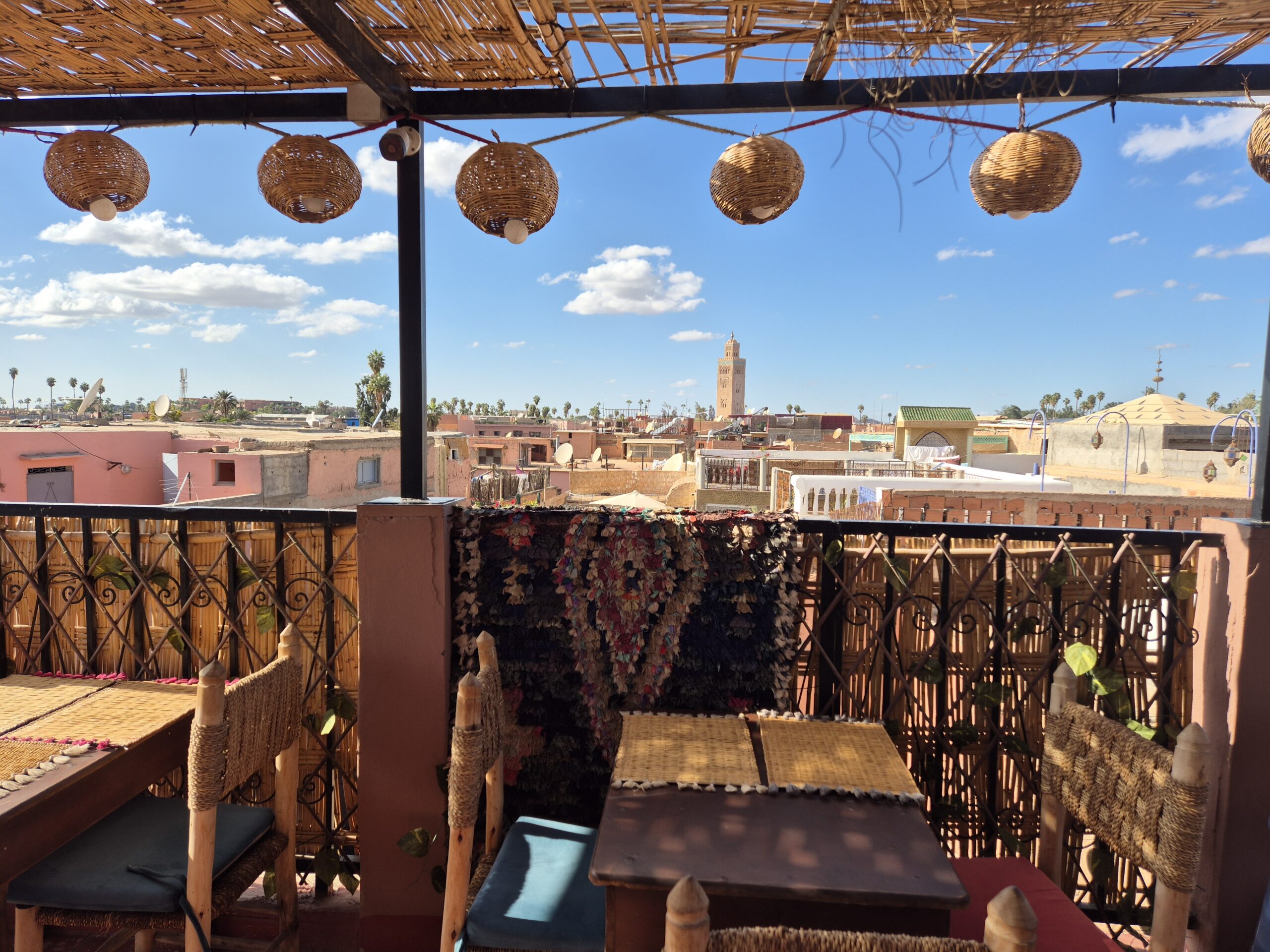
Nearby, the Koutoubia Mosque anchors the city. We admire it only from the outside. The minaret stands calm and steady, visible from many angles. It becomes a point of orientation, both physical and internal. Non-Muslims are not permitted inside the prayer hall, a long-standing practice that preserves the mosque as a place of worship rather than visitation. Observing it from a distance invites respect, stillness, and quiet awareness before moving on.


Madrasa Ben Youssef – Mindful travel in Marrakesh
At Madrasa Ben Youssef, the mood turns inward. Geometry, symmetry, and quiet shape the space. This Islamic school once taught hundreds of students, some of whom lived here for years in tiny rooms around the courtyard. On the top floor, a short film shows how each tile and carved detail was made. After seeing the careful work behind every piece, the beauty of the courtyard feels even more striking. We linger longer than expected, watching light shift across the arches, and feel how knowledge, devotion, and craft come together in perfect harmony.


We planned to visit Jardin Majorelle. The garden is well known for its vivid blue tones, beautiful plants, and carefully designed paths. However, when we arrived in the morning, all tickets for that day were already sold out, with only a few left for the following day. We also saw the long queue of visitors who already had tickets. Faced with the wait, we chose to step away rather than rush the experience. At times, mindful travel means accepting what is not available and adjusting with ease.
Travel tip: If you wish to visit Jardin Majorelle, buy your ticket online well in advance. Same-day availability is limited, and popular time slots often sell out early, especially during peak seasons.


Aghmat and the Ourika Valley
After the intensity of Marrakesh, we turn toward the mountains. The road leads east, and the city slowly loosens its grip. Traffic thins. The air feels lighter. Soon, the Atlas Mountains appear in the distance, steady and calm.
Why Visit Aghmat – Mindful travel in Marrakesh
Aghmat offers a quieter alternative to staying in Marrakesh. Riads here are often much more affordable, while still providing comfort and beauty. The town feels peaceful, with fewer crowds and a slower rhythm that allows you to truly chill out among nature. From many spots, the Atlas Mountains remain visible in the distance, grounding the experience in calm and space. Time spent in a place like this – between one busy week at work and another – feels truly priceless. It helps that staying here often costs around half the price you would pay for similar conditions in Marrakesh, making Aghmat a rare balance of rest, nature, and value.
In Aghmat, we pause. This small town feels grounded and quiet. A beautiful garden opens into wide views of the surrounding landscape, with palms, paths, and space to slow your steps. Here, nature leads the experience. Nothing asks for urgency. Instead, the mountains remind you to breathe deeper and stay present.


Anima Garden
From Aghmat, we continue toward the Ourika Valley with a stop in Anima Garden, created by artist André Heller, which feels like a living artwork framed by the Atlas Mountains. As you walk through it, winding paths lead past tropical plants, bamboo groves, and playful sculptures, revealing unexpected corners at every turn. Light shifts constantly, changing the colours and views, so the garden always feels alive.
What makes it special is how art and nature coexist. Sculptures invite curiosity without dominating the space, while the plants bring calm and softness. Through open spots, the Atlas Mountains appear in the distance, grounding the experience and reminding you where you are. Stopping here offers a gentle transition from city to valley. It slows your pace, clears the mind, and leaves you refreshed, inspired, and ready to continue the journey toward the Ourika Valley.


Unfolding Landscapes: From Marrakesh / Aghmat to the Ourika Valley
The drive toward the Ourika Valley offers a gradual unfolding of Morocco’s landscapes. As the city fades behind you, the road curves through olive groves, terraced fields, and small villages clinging to hillsides. The Atlas Mountains appear closer with every turn, their peaks steady and calm, reminding you of scale and perspective. Rivers glint in the sunlight, and the air feels fresher, carrying the scent of earth and herbs. Each stop along the way – a viewpoint, a small garden, or a riverside café – invites a pause to notice details often missed when rushing. The journey itself becomes part of the experience, not just a route to the valley, and encourages a slower pace, deeper breathing, and quiet appreciation of the land.


Riverside Restaurants near Ourika Valley: Dining by the Flowing River
One of the most unforgettable experiences on our journey came when we stopped at a riverside restaurant on the way to the Ourika Valley. While researching what to do in Marrakesh, photos of these colorful riverside spots immediately caught my attention. Since they are not located in Marrakesh, you need to rent a car or book a guided trip to reach them. Once there, you sit by the river and watch the water flow gently right next to you. The scenery transforms even simple moments, and sipping traditional Moroccan mint tea feels especially vivid in such surroundings. With every glance at the moving water and the mountains around, time seems to slow down, your senses sharpen, and the world softens around you.
Travel tip: We recommend skipping lunch in the Ourika Valley itself and stopping instead at one of the riverside restaurants along the way. The valley can feel very overcrowded, especially during the day. You’ll find nearly the same views and atmosphere elsewhere, without the noise or feeling squeezed.


What to Eat in Morocco: Traditional Food in Marrakesh
Moroccan cuisine reflects the country’s history, geography, and way of gathering. In Marrakesh, food connects daily life with ritual, hospitality, and time. Eating here is rarely rushed. Instead, meals invite sharing, conversation, and presence – an essential part of mindful travel in Morocco.

Tagine – The Heart of Moroccan Cooking
Tagine takes its name from the clay pot in which it is cooked, a method that dates back centuries. Slow heat allows meat, vegetables, spices, and herbs to soften gradually, creating deep, layered flavors. You’ll find many variations in Marrakesh, but each one encourages patience – the food arrives ready only when time has done its work.


Couscous – A Friday Tradition – Mindful travel in Marrakesh
Couscous holds a special place in Moroccan culture and traditionally appears on Fridays, after communal prayer. The dish consists of steamed semolina grains topped with vegetables, chickpeas, and slow-cooked meat, all gently infused with spices. Eating couscous on Friday connects you to a long-standing rhythm of family, rest, and togetherness.
In Marrakesh, we highly recommend Naima Couscous. Here, one woman cooks everything herself, welcoming guests into what feels less like a restaurant and more like an authentic Moroccan kitchen. You eat from a traditional shared plate, enjoy mint tea, and when you leave, she offers homemade cookies from a large metal box – a small gesture that stays with you long after.


Moroccan Mint Tea – More Than a Drink
Moroccan mint tea blends green tea, fresh mint, and sugar, and locals often call it “Berber whisky” because of its importance in social life. Tea here marks pauses – arrivals, conversations, and moments of rest. The ritual matters as much as the taste.
For an authentic experience, we recommend 1112 Teahouse in Marrakesh. The space combines vibrant green plants, a calm atmosphere, and a rooftop view over the city. When we visited, the waiter told us we were lucky – rain the night before had cleared the sky, revealing the Atlas Mountains from the rooftop, something that doesn’t happen often. It felt like a simple reminder: what happens is exactly what is meant to happen, even when it doesn’t match the plan.


Moroccan Breakfast and Baghrir – Mindful travel in Marrakesh
Moroccan breakfasts often include bread, olive oil, honey, and baghrir, a soft pancake known for its many tiny holes. Made from semolina, baghrir absorbs butter and honey effortlessly. Its texture feels light and airy – if a cloud had a taste, this would be close to it. Trying it fresh offers a gentle, comforting start to the day.


Freshly Squeezed Pomegranate Juice
Fresh pomegranate juice appears everywhere in Marrakesh, pressed on the spot at street stalls. The flavor balances sweetness with sharp freshness, making it both energizing and grounding. It’s simple, honest, and deeply refreshing, especially after walking through the medina.

Strawberry Tree Fruit – A Roadside Surprise
On the way back from the Ourika Valley, we bought strawberry tree fruit from a local street vendor. The taste surprised us – mildly sweet, slightly earthy, and unlike common fruits. Sold casually along the road, it felt like a small, unexpected discovery that added texture to the journey.

Camel Milk Chocolate – A Taste to Remember
At the airport, we tried camel milk chocolate, a specialty you’ll find in Morocco. The taste feels rich and slightly different from cow’s milk chocolate, although spices like cardamom make the difference subtle. Still, we loved it. It’s worth trying, not for comparison, but for curiosity – and for bringing a small piece of Morocco home.

Where to Stay in Marrakesh and Aghmat (near Ourika Valley)
Morrocan Riad
When visiting Marrakesh or the Ourika Valley area, choosing a traditional riad can transform your stay. A riad is a Moroccan house or palace built around a central courtyard or garden, often featuring fountains, plants, and open sky above. Unlike typical hotels, riads offer privacy, calm, and a more personal connection to Moroccan life. The thick walls shield you from the noise of the medina, while the courtyards create a peaceful oasis – perfect for slowing down and reflecting after a day of exploration. Staying in a riad is about presence, comfort, and hospitality, rather than just a place to sleep.
Insider tip: Before booking, it’s important to note that many riads advertise a swimming pool, but these are often very small – more decorative than practical. If a real swimming pool matters, pay attention, as “pool” riads tend to cost more without always delivering space to swim.
Riad Mina, Medina, Marrakesh – Mindful travel in Marrakesh
In Marrakesh, we stayed at Riad Mina, and it proved to be a wonderful choice. The riad is clean, calm, and well cared for, offering a peaceful retreat inside the city. The bathroom feels a little outdated, but nothing feels neglected or uncomfortable. It simply reflects the age and tradition of riads, which are often historic homes rather than modern buildings. For us, this added to the character rather than taking away from the experience. Breakfast is served fresh every morning and deserves a special mention – you can see it featured in the food section of this post. Compared to many other riads in Marrakesh, the price is very affordable, especially considering the comfort and quality provided. The riad also has a rooftop terrace with a pleasant view, offering a quiet place to sit, enjoy tea, and watch the city slow down at the end of the day.
👉 Check availability and current prices for Riad Mina here


Riad Clé de Sol, Aghmat, near Ourika Valley
In Aghmat, we highly recommend Riad Clé de Sol. The rooms are spacious, clean, and thoughtfully designed. Unlike many city riads, this one offers a proper swimming pool, a beautiful garden, and open views toward the Atlas Mountains. The atmosphere feels relaxed and grounded, making it easy to slow down and truly rest. The price remains very reasonable for what you receive.
👉 Explore Riad Clé de Sol and book your stay here


A Long-Awaited Journey, Finally Fulfilled
Marrakesh lived on our travel list for a very long time. In 2025, it finally became a fulfilled travel goal. For years, we postponed it, influenced by stories from friends who visited long ago and didn’t enjoy the experience. Most memories centered around pushy sellers and uncomfortable moments in the medina. One friend even described being asked to pay simply for entering a shop, followed by anger when he chose not to buy. Those stories stayed with us.
Yet places evolve – and so do travelers.
Marrakesh Today: A Different Experience – Mindful travel in Marrakesh
This time, Marrakesh welcomed us differently. We moved through the medina with ease and curiosity, entered shops, asked for prices, and walked away when something didn’t feel right – without pressure or frustration. We enjoyed shopping for argan oil, which we highly recommend bringing home as a souvenir if you wonder what to buy in Marrakesh or what to bring from Marrakesh. High-quality argan oil, especially when presented in a beautiful traditional Moroccan bottle, makes a meaningful and practical reminder of the journey – that is what Puro Concept Store offers (located here). Later we admired traditional Moroccan metal lamps, and tried on dresses just for the joy of it. At no point did we feel harassed.
Our experience stood in clear contrast to what we had heard from years past. Marrakesh has changed. The energy feels more open, more respectful, and easier to navigate mindfully.
This journey reminded us of something important: travel deserves presence, not preconceptions. When we meet a place as it is – not as others once described it – we allow space for surprise. Marrakesh offered that lesson generously, and we leave with gratitude, trust restored, and a deeper appreciation for moving slowly and openly through the world.

Continue Your Journey with More Inspiring Travel Guides
If you found this Marrakesh and Ourika Valley guide meaningful, you might also enjoy these thoughtful travel stories and destination guides from JourneyJoy – all written with mindful travel at their heart:
- Istanbul Weekend Guide: The Best Things to Do in 48 Hours – Dive into a city where East meets West, explore historic mosques, vibrant bazaars, and hidden corners that reward slow exploration.
- Best Rooftop Restaurants in Istanbul with Stunning Views (2025) – A curated list of rooftop spots in Istanbul where you can sip authentic Turkish tea or a meal while soaking in panoramic cityscapes.
- How to Choose the Perfect Accommodation: A Simple Guide – Practical tips for selecting stays that enhance your travel experience, whether in riads, hotels, or boutique lodgings.
- DIY Travel Booking – How to Plan & Book Your Holiday Online – Learn how to take control of your travel planning with mindful, flexible choices that fit your trip style.
- DIY Cappadocia Guide: Red, Green & Blue Tours + Göreme Tips – If the idea of landscapes and slow travel calls you beyond North Africa, this Turkey road-style guide offers next-level adventure.
Each of these posts expands on themes similar to this Morocco adventure – from navigating historic cities and local markets to planning your accommodation and slowing down to savor each journey.
